

image sourced from: drive.com.au
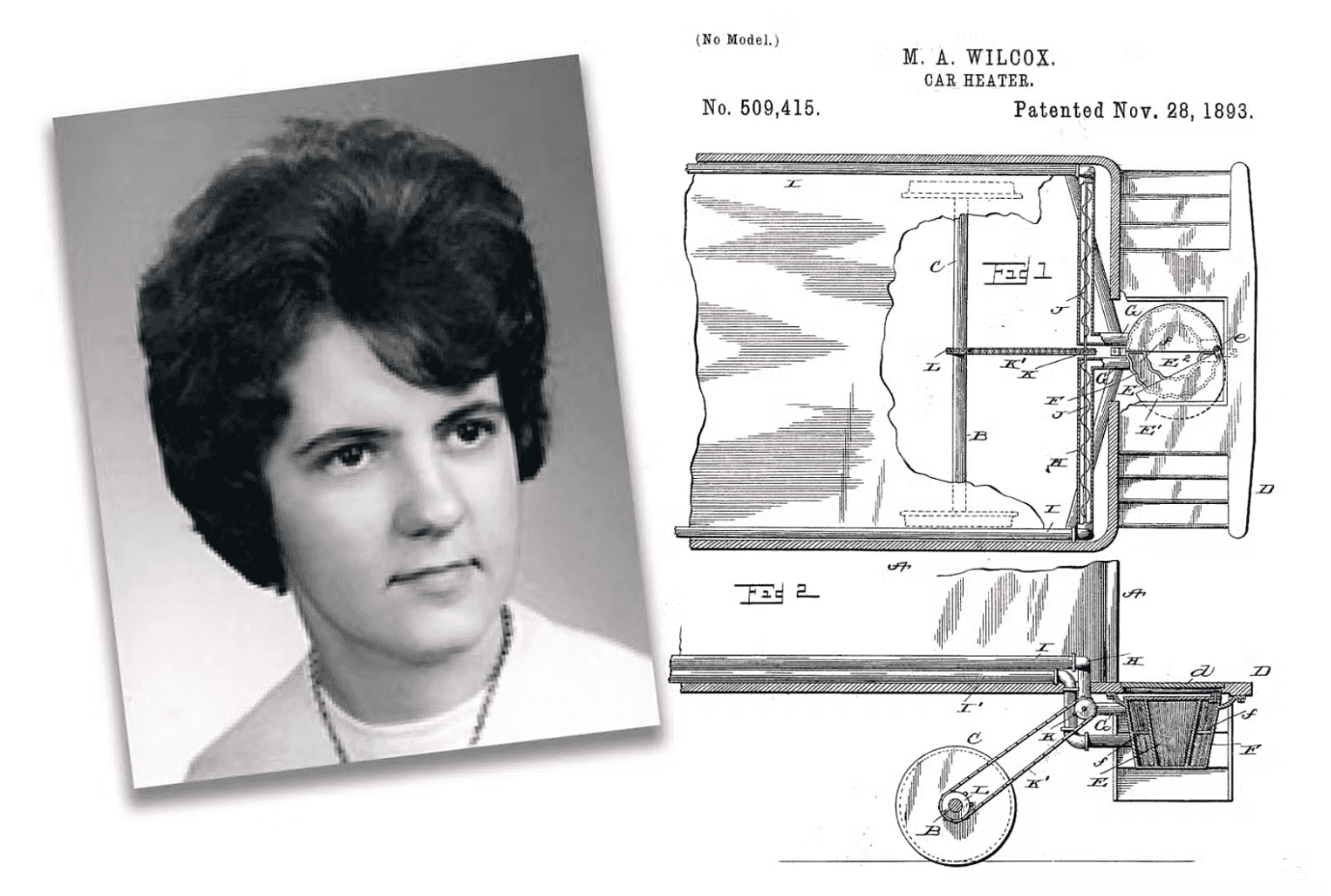
Margaret Wilcox was an American inventor and mechanical engineer. She designed an automotive heating system, which served as the foundation for the modern car heater.
Margaret was born in Chicago, Illinois in 1838. Not much is known about her early life. At an early age, she developed an interest in mechanical engineering.
Margaret’s goal in life was to develop machines to make daily life easier. In her 20s, she recognized that people who traveled via train were freezing in railway cars whenever the temperatures dropped.
Some of her earlier inventions were patented under her husband’s name because it wasn’t always legal for women to hold a patent.
In 1893, Margaret was legally able to patent her design under her own name for her automotive heating system, and she got full credit for her car heater invention.
Her invention featured an opening to direct warm air from the internal combustion engine into the vehicle’s interior. This invention was originally designed to heat cold railway cars. What was particularly innovative about this design was that it used all of the engine’s residual heat.
In 1929, Ford equipped car cabins with Margaret’s invention of using residual engine heat, and passengers felt a noticeable difference in the warmth of the interior.
Margaret’s invention didn’t originally include temperature controls. Her original design was eventually modified to include controls to prevent vehicle cabins from overheating.
We can feel Margaret’s legacy every time we get in the car during the cold winter months! Her automotive heating system paved the way for modern vehicle heating as we know it today. Thanks to her invention, we’re able to ride comfortably in our vehicles and stay warm as we travel, whether it’s commuting to work, running errands, or heading out on a road trip.